


Choosing a Bookkeeper:
What Should I Look For?
A practical guide for Australian Business Owners comparing bookkeeping services.
Choosing a Bookkeeper isn't just about finding someone to process transactions.
You're trusting someone with the financial information behind your business.

This guide explains what a good bookkeeper should do, what qualifications and registration to check, what questions to ask, warning signs to watch for, what you should expect from an ongoing bookkeeping relationship and more.



Choosing a bookkeeper?
7 Important Checks Before You Decide.
1
Registered BAS Agent

(If Lodging BAS)
Are they appropriately qualified and registered for the services you need?
4
Decision Ready Data
How often will your accounts actually be reconciled?
7
Proactive
Comms
Will they tell you when something in your numbers needs attention?
2
Service Inclusions
Do they clearly explain what's included in their service?
3
Business Acumen
Do they understand your business, industry and accounting systems?
5
Financial
Reporting
What financial information will you receive back?
6
Accountant
Collab
Collaboration: Will they work effectively with your accountant?
Keep reading. We'll explain why each one matters.
What should a good bookkeeper actually do?

The fundamentals matter. Your financial records need to be accurate, current and properly reconciled.
Depending on your business, that may include day-to-day bookkeeping, bank reconciliation, accounts payable and receivable, payroll, super and STP, BAS services, Xero, reporting and keeping your records accountant-ready.
But that's only the starting point.
A good bookkeeping relationship should also give you confidence in the information you're using to run the business.
You should be able to ask:
Where is our cash going?
Are costs creeping up?
Are our margins changing?
Is payroll putting pressure on the business?
Is something in the numbers starting to move in the wrong direction?

Sherpa Tip
Don’t just ask if your books are accurate.
Ask whether your bookkeeping gives you the visibility to make better business decisions.
Warning signs when choosing a bookkeeper.
🚩
Price isn't the only thing worth comparing.
Look carefully at how the service will actually work.
🚩 Be cautious if you can't get a clear answer about:
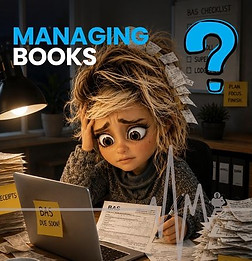
Who will actually manage your books?
You should know who is responsible for your financial records and who you contact when something needs attention.
🚩

How often your accounts will be reconciled?
"Bookkeeping included" doesn't tell you whether your records are being reviewed weekly, monthly or irregularly.
🚩

What's actually included in the fee?
Payroll? BAS? Accounts payable? Reporting? EOFY preparation? Support when you have a question? Find out before comparing prices.
🚩

What happens when something looks wrong?
Your bookkeeper shouldn't simply process unusual transactions or discrepancies without asking questions.
🚩
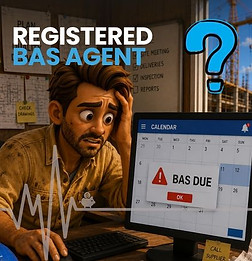
BAS Agent Registration?
If you require BAS services, make sure those services are being provided through someone appropriately registered.
🚩

What information you'll receive back?
If everything disappears into Xero and you still don't understand where the business stands, you're missing part of the value good bookkeeping can provide.
🚩
What qualifications should I look for
in a bookkeeper?
Qualifications matter — particularly when you're giving someone access to your business finances.

If you require BAS services, check that those services are being provided through an appropriately registered BAS or Tax Agent.
Registration as a BAS Agent involves qualification and relevant-experience requirements and ongoing professional obligations.
But qualifications and registration shouldn't be the only things you consider.

Before you appoint a Bookkeeper, check...
☐ BAS Agent registration where BAS
services are required
☐ Relevant bookkeeping/accounting
qualifications
☐ Practical business experience
☐ Do they understand cash flow?
☐ Can they recognise when something
in your numbers doesn't look right?
☐ Experience with businesses like yours
☐ Xero/accounting software capability
☐ Payroll and super knowledge, if
applicable
☐ Systems and cloud integration
capability
☐ How your information and access will
be protected
☐ How they'll communicate with your
accountant
☐ Who will actually be responsible for
your account
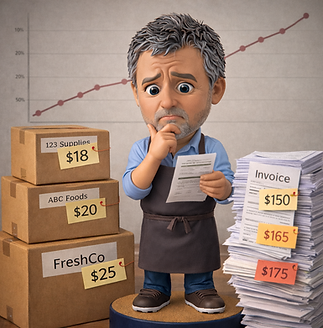
Will this Bookkeeper know how to spot Anomalies?
Sherpa Tip
Don’t just ask if they’re qualified. Check.
Before engaging a bookkeeper, verify:
✓ Their registration is current
✓ The registration belongs to the person or business you're engaging
✓ The services you need are covered by their qualifications/registration
✓ They hold appropriate professional indemnity insurance
Can my bookkeeper lodge my BAS?
Not every bookkeeper can legally provide BAS services for a fee.

If you need your bookkeeper to prepare or lodge your BAS, or provide advice about BAS-related obligations, those services generally need to be provided by an appropriately registered BAS Agent or Tax Agent, unless an exemption applies.
That's why BAS Agent registration is one of the things worth checking when choosing a bookkeeper in Australia.

Bookkeeper vs BAS Agent : what's the difference?
A bookkeeper can perform many bookkeeping and financial record-keeping tasks, but providing BAS services for a fee is regulated in Australia.

If someone is providing BAS services for a fee or other reward, they generally need to be registered with the Tax Practitioners Board as a BAS Agent or Tax Agent, unless an exemption applies.


A registered BAS Agent can provide BAS services covered by their registration, which can include advice and assistance with GST, PAYG withholding, payroll-related obligations and preparing or lodging activity statements.
So if your business needs more than basic bookkeeping, ask:
You can check registration through the Tax Practitioners Board's public register.
Is this person or business appropriately registered for the BAS services I need?
Bookkeeper vs Accountant : What's the Difference?
Bookkeepers and accountants work with business finances, but they generally perform different roles.


%20-%20445%20X%20667px%20(35).png)
A bookkeeper typically works with your financial records throughout the year — keeping transactions, reconciliations and financial processes accurate, organised and up to date. Depending on the services required, this may include payroll, accounts payable and receivable, BAS services, Xero and regular financial reporting.
An accountant will typically use that financial information for areas such as annual accounts, income tax, business structures and broader accounting and tax advice.



For many businesses, therefore, it isn't: Bookkeeper OR Accountant. It's :
The better those records are throughout the year, the better the information your accountant has to work with.
Accurate Bookkeeping throughout the year
Reliable Financial Information
Accountant-ready Records at EOFY.
Do I need both a bookkeeper and an accountant?

For many businesses, yes
Yes. Why?
Because they serve different purposes.
Think of your bookkeeping as the financial groundwork being maintained throughout the year. Your accountant can then work from accurate, reconciled records when completing annual accounts, taxation work or providing broader accounting and tax advice. The relationship works best when information doesn't have to be reconstructed at EOFY.
At Sherpa, part of good bookkeeping is making sure the financial records are organised and accountant-ready, helping your bookkeeper and accountant work from the same reliable information.
Who do you actually need?
Bookkeeper
• Day•to-day bookkeeping
• Xero setup and support
• Payroll and super (STP)
• Keeps your records accurate
Maintains the ongoing financial records and processes of the business.
BAS Agent
• Registered with the TPB
• Prepares and lodges BAS & IAS
• Ensures GST compliance
• Often also a Bookkeeper
Can provide BAS services within the scope of their registration.
Accountant
• Tax planning and advice
• Financial statements
• Business structure and strategy
• Uses your bookkeeping records
Typically handles areas such as annual accounts, income tax, business structures and broader accounting and tax advice.
Do businesses need all three?
They aren't necessarily three separate people. The important thing is that the right expertise and registrations exist for the work your business needs.
For many businesses the ideal flow is:
Accurate bookkeeping throughout the year → reliable financial information → accountant-ready records → smoother EOFY.
How Your Bookkeeper & Accountant Work Together
How Sherpa supports your business alongside your Accountant.

BI
Ready to work out what you need — and who you need?
Assess your business needs, then know what to look for when comparing bookkeepers.
When should I hire a bookkeeper?
You don't need to wait until your bookkeeping becomes a problem.

Has your business outgrown DIY bookkeeping?
If you answer yes to several of these questions, it may be time to hire a bookkeeper.
Click for Questions:


☐ Bank reconciliations are falling behind.
☐ I spend time fixing bookkeeping instead of running the business.
☐ BAS deadlines are becoming stressful.
☐ Sales are increasing but I'm unclear about cash flow or profitability.
☐ Payroll is getting more complicated.
☐ I'm not confident the numbers in Xero, MYOB, bookkeeping software are right.
☐ The business has grown but our financial processes haven't.
☐ My accountant regularly needs corrections at EOFY.
☐ I'm doing bookkeeping at night or on weekends.
Yes, yes & YES

Your business has grown — but your financial visibility hasn't grown with it.
There's another sign that can be easy to miss:
If money is moving through the business but you can't easily answer how much cash you have, where it's going or whether you're making the profit you think you are, bookkeeping is no longer simply an administration task.
Already behind? That's not a reason to delay. It's a reason to get the foundations sorted.
If you're already behind, you haven't missed your opportunity to get help. Sherpa's Bookkeeping Rescue service is designed to clean up and rebuild the bookkeeping foundations before moving forward.
Should I outsource my bookkeeping or employ someone?
There isn't one answer for every business.
If your business has enough day-to-day financial administration to keep someone genuinely busy, an in-house bookkeeper may make sense.

For many small and growing businesses, however, outsourcing can provide access to bookkeeping expertise, systems and ongoing support without creating a dedicated internal position.
In-house or outsourced bookkeeping?
The decision should ultimately come down to how much financial administration your business has, how complex it is and what level of support you actually need.
So outsourcing your bookkeeping shouldn't mean becoming disconnected from your business. The objective should be to take bookkeeping off your desk while giving you a clearer view of your financial position.
Consider
In-House
Outsourced
Daily administration
Useful where substantial daily work exists
Better suited where support is periodic
Staffing
Dedicated internal person
No dedicated employee required
Expertise
Primarily dependent on that person's skills
Can provide access to broader expertise
Capacity
Fixed
Can adjust as requirements change
Continuity
Reliant on internal coverage
Provider/team model can offer continuity
Systems
Managed internally
Often cloud/process driven
Best suited to
Businesses with substantial ongoing finance administration
Small/growing businesses needing flexible specialist support
Outsource the workload. Not the visibility.
"I've got Xero. Why do I still need a bookkeeper?"

Because having accounting software and having reliable financial information aren't the same thing.
Xero can automate and streamline a lot of bookkeeping, but it still relies on correct setup, accurate transaction treatment, reconciliations, payroll processes and people making appropriate decisions about the information going into it.
Think of Xero and MYOB as the system. Your bookkeeping determines the quality of the information inside it.
And that's what determines whether the reports you're looking at can actually be trusted.

How much should a bookkeeper cost?
- Comparing bookkeeping quotes, compare like with like.
There is no single price that's right for every business. Two bookkeeping quotes can look very different while providing completely different services.
Bookkeeping costs can vary depending on factors such as:
-
Transaction volume and complexity
-
Number of employees and payroll requirements
-
BAS and GST requirements
-
Accounts payable and receivable
-
Number of bank accounts or entities
-
Accounting software and integrations
-
Whether the books are already accurate and up to date
-
Reporting requirements
-
The level of ongoing support required
That's why comparing bookkeepers purely on price can be misleading.
"What does it cost?"
"What am I Actually getting for the fee?"
Compare
with
☐ Frequency of reconciliation
☐ Payroll included/not included
☐ BAS/IAS included/not included
☐ Accounts payable/receivable
☐ Reporting (What, To Who & How Frequent?)
☐ Software/integrations
☐ EOFY accountant preparation
☐ Catch-up/cleanup requirements
☐ Communication/support
☐ Who actually performs the work
Before deciding one is cheaper, compare:
Don't just ask:
A better question is:
Find out what's included, how frequently the work will be completed, who will manage your books, what reporting you'll receive and what happens when you need help.
Low-cost bookkeeping isn't necessarily good value if you're left with unresolved reconciliations, inaccurate records or little understanding of your financial position.
What should be included in
ongoing bookkeeping?
There isn't one package that suits every business.
The scope should reflect your transaction volume, employees, systems, compliance requirements and the level of financial support you need.
Depending on the business, ongoing bookkeeping may include:
Bank Reconciliation
Keeping bank and accounting records aligned and identifying discrepancies.
Accounts Payable
Managing supplier bills, payment information and outstanding commitments.
Accounts Receivable
Keeping customer invoices and outstanding amounts visible and up to date.
Payroll, Super & STP
Maintaining accurate payroll processes and associated reporting.

BAS & IAS
Preparation and lodgement through an appropriately registered practitioner where required.
Financial Reporting
Regular information that shows what's happening in the business.
Accountant-ready Financials
Keeping records organised and reconciled so they're ready when your accountant needs them.
Ask how often it's done, who is responsible and what information you'll receive back.
But don't just ask what is included.
11 Questions to Ask Before Hiring a Bookkeeper - And One That Really Matters.
Don't make "How much do you charge?" your only question.


Ask:
-
What exactly is included in your service?
-
Who will actually be doing my bookkeeping?
-
Are you appropriately registered for the BAS services I need?
-
How often will my accounts be reconciled?
-
How do you manage payroll and super?
-
Do you work with Xero and my other business systems?
-
What happens if my existing bookkeeping is inaccurate or behind?
-
What financial information or reports will I receive?
-
Will you help me understand that information?
-
How will you work with my accountant?
-
Do you have experience with businesses like mine?

“If you see something in my numbers that I should know about — will you tell me?”

And then there's one question that is particularly important and really matters:
Because good bookkeeping shouldn't simply process what's already happened.
It should help you see what's happening in your business.
The Sherpa Difference


Accurate bookkeeping is the foundation — not the finish line.


At Sherpa, we've built our approach around two connected services.
Smarter Bookkeeping
Gets the financial foundations right — including bookkeeping, BAS, payroll, Xero, MYOB, reconciliations, financial records and reporting.
Operational Intelligence
Takes those reliable numbers further — helping business owners gain greater visibility over cash flow, profitability, costs and business performance.
Together, the objective is to move from:
Accurate numbers → Financial visibility → Better-informed business decisions
Know where your business stands — without having to become an accountant yourself.
We guide. You summit.
Fiona Todd
Founder
Sherpa Bookkeeping
B.Bus. (Acc)


20+ Years' SMB Support
Sherpa brings over 20 years' experience supporting SMEs across multiple industries, together with registered BAS services and accounting-qualified leadership.
Fiona Todd B.Bus. (Acc) | BAS Agent: 26257291 | MYOB | XERO Payroll Certified | Institute of Certified Bookkeepers | XERO Silver Partner | Cyber Wardens (2025) | Hubdoc | Aust Bookkeepers Network |



Choosing a bookkeeper?
The right bookkeeping relationship should give you more than completed transactions.
You should know who is looking after your books, what they're responsible for, whether they're appropriately qualified and registered for the services you need — and what you're getting back from the relationship.


If you're looking for bookkeeping support for your business, talk to Sherpa about where your bookkeeping is now and where you need it to be.
Talk to Sherpa
Book a free 15-minute introductory call with Fiona.